


MOHR Choice Awards are given to MOHR member organizations that have created innovative and impactful programs to positively affect the lives of individuals with disabilities. The winners consist of large and small day program and employment services organizations throughout the state and include programs focused on art, building life skills, employment readiness and participation, and community engagement.
Congratulations to our 2026 MOHR Choice Award Winners!
Rise - Restaurant Ready
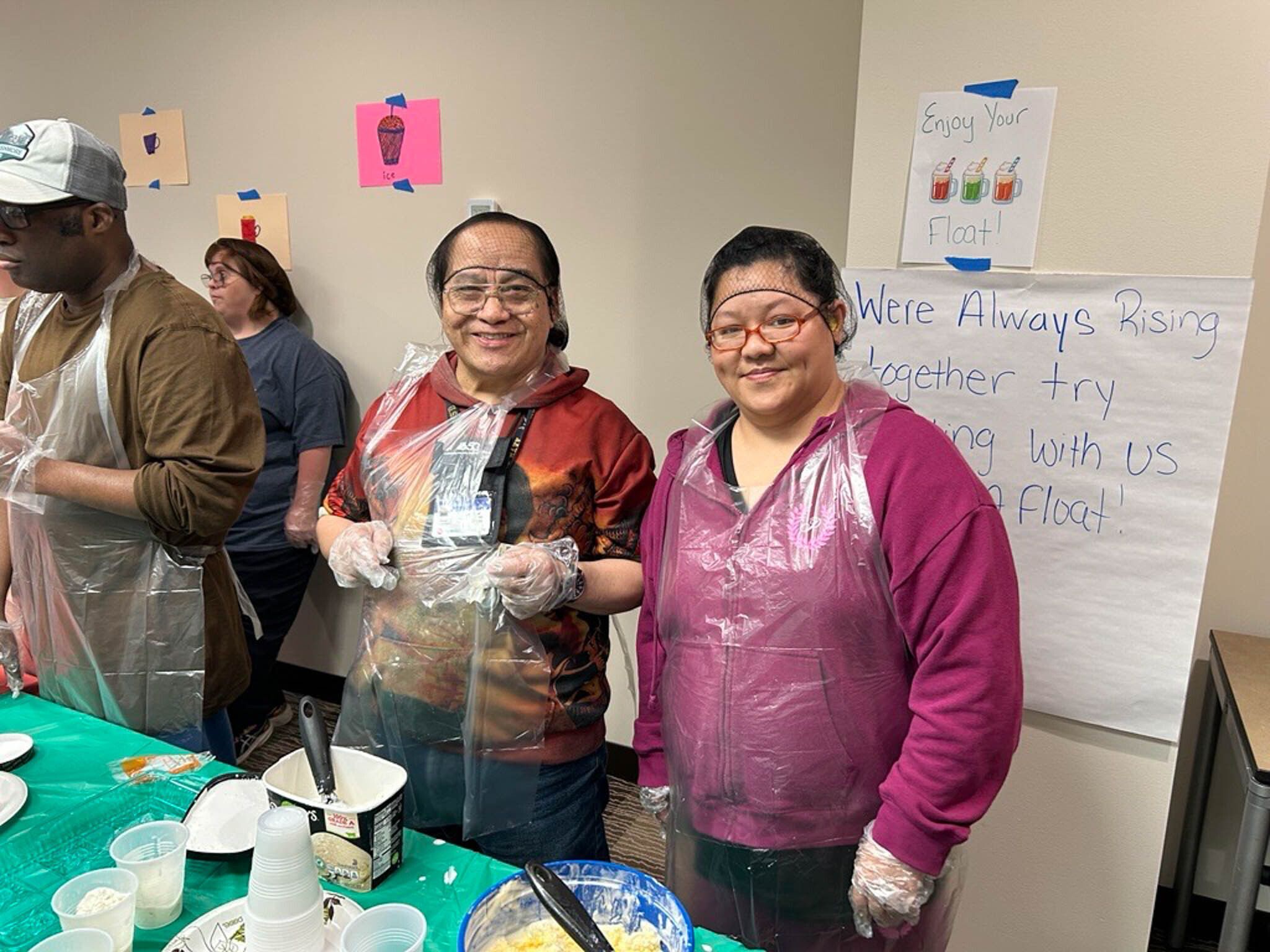
Two participants in Rise's Restaurant Ready program serve ice cream floats as part of their immersive simulation
Rise of Fridley, MN, has been awarded a 2026 MOHR Choice Award for their Restaurant Ready program. Delivered in partnership with the Minnesota Hospitality Association, Restaurant Ready seeks to remove barriers to hospitality employment by creating inclusive, real-world training for people with intellectual disabilities and people who are Deaf, DeafBlind, nonverbal, or have other challenges.
Using immersive, real-world simulations such as meal services, concession stands, and catering-style events, participants have gained valuable, collaborative experience in service environments. Rise has also worked with employment partners enthusiastic about working with people with disabilities, ensuring Restaurant Ready graduates have safe, respectful, and inclusive workplaces.
Since its launch in May 2025, over 40 people have participated, 11 have pursued competitive employment, 6 have secured jobs, and 2 have launched their own microbusinesses.
One participant, J, entered Restaurant Ready after a long absence from the workforce and while experiencing food insecurity. Through the program, J rebuilt their confidence, earned a Restaurant Ready certificate, and connected with industry partners. With support from Rise, J is now employed, earning $18 per hour as a part-time worker, and can independently contribute to their family’s basic needs. Stories like J’s reflect the program’s deeper impact in restoring stability, dignity, and hope.
“This has been an excellent program, and people are genuinely excited about it,” says Rise Vice President of Vocational and Housing Services Kassia Janezich, “The success is rooted in the passion of our team, who consistently deliver the program, create meaningful learning opportunities, and follow up to encourage growth.”
Udac - Technology Beyond an iPad
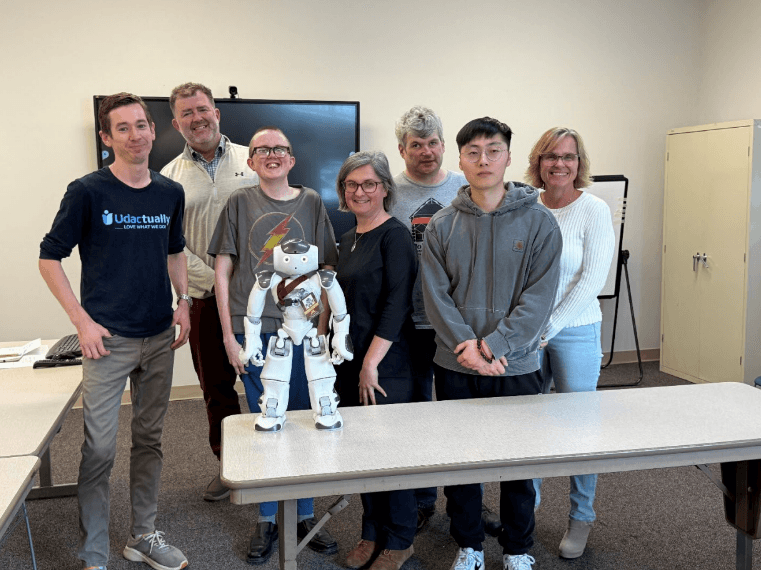
The Udac Technology Beyond an iPad Team surrounding Nao, the humanoid robot. From left to right – John Skiba, Project Manager, Udac; Jan Siska, Professor, Charles University, Czech Republic, ICI Visiting Scholar; Brian Wiemer, Essentia Health; Renat Ticha, Professor, University of MN – ICI; Ben Geisen, Twin State Cleaning; Haoyi Shi, University of Minnesota, Robotics Institute; Lola Aune, Udac Director, Human Resources
Udac, Inc of Duluth, MN, has been named a 2026 MOHR Choice Award recipient for their Technology Beyond an iPad program. This pioneering program is exploring how advanced technologies can transform traditional disability supports for people with intellectual and developmental disabilities through Nao, an AI-powered socially assistive humanoid robot.
This first-of-its-kind program is being developed in collaboration with the University of Minnesota Robotics Institute (MnRI), College of Science and Engineering, University of Minnesota and the University of Minnesota Institute on Community Integration. Aimed at promoting independence, empowerment, and confidence, Nao has proven effective in a range of support areas, including social interaction, communication skills, emotional regulation, task sequencing, reminders, time cues, job-specific learning, and conflict resolution.
“You can see the engagement and instant connection,” shared the project lead, John Skiba, “The [participants] are really listening to what Nao is saying in a way that is different than another staff member.” Anecdotal evidence suggests that some participants may prefer advice from Nao. As a non-parental, non-authority figure, some regard Nao’s responses as more neutral and knowledgeable than their career and life coach’s responses, even when both are giving similar advice.
Udac Executive Director Karen Herman reports a sense of independence and expanded autonomy among participants, “It has been empowering them in many ways... We are asking the question: Can robots augment and/or replace humans as job coaches and partners for individuals with developmental disabilities?”
While still in development, the long-term goal is to build participants’ confidence in interacting with these advanced technologies and to replicate similar technology across organizations nationwide.
